
 By Ben Luthi
Is No Credit Better Than Bad Credit?
By Ben Luthi
Quick Answer
Lack of credit and bad credit can make it hard to get a loan or credit card, rent an apartment and perform other tasks, but no credit is better than bad credit.

Lack of credit and bad credit can both make it hard to get a loan or credit card, rent an apartment and handle other important tasks.
But no credit is better than bad credit, primarily because a lack of credit history can be addressed in a matter of months, while bad credit can take years to rebuild.
What Does It Mean to Have No Credit?
Having no credit means you don't have enough credit history to generate a credit score. People with no credit are sometimes called credit invisible. This typically means they have no active credit report at one or more of the national credit bureaus (Experian, TransUnion and Equifax).
Most people with no credit have simply never borrowed money or used a credit card. This is common among young adults and recent immigrants (since credit obtained outside the U.S. does not appear on credit reports here). It's also possible to lose your credit score after years of positive history. If you go six months or more without any borrowing or payment activity, the FICO scoring system can no longer generate a score from your credit file.
That doesn't mean your credit history no longer exists, but you may still have a hard time getting approved for a loan with no credit score.
Learn more: What Is a Credit Score?
What Does It Mean to Have Bad Credit?
Bad credit means your credit report contains information that results in a very low credit score.
FICO® ScoresΘ and VantageScore® credit scores range from 300 to 850. FICO classifies scores of 579 or below as poor, while VantageScore considers a score of 600 or less to be subprime—an industry term for poor credit. The entries most likely to cause a serious score drop include:
- Bankruptcy
- Foreclosure on a home or other real estate
- Bills sent to collection agencies
- A pattern of missed or late payments
All of these signal to lenders that you've struggled to repay debt as agreed—a red flag that scoring models respond to with significant score reductions.
Is No Credit Worse Than Bad Credit?
No credit and bad credit often create similar problems for potential borrowers, but they are not the same thing.
When a lender runs a credit check on someone with no credit, no score can be generated. When a credit check is performed for someone with bad credit, a low score comes back. Both outcomes can result in:
- Difficulty qualifying for loans or credit cards
- Ineligibility for instant financing on purchases like phones or cars
- Landlords refusing to rent you a home or apartment
- Higher security deposit requirements for apartments, utilities and rental cars
The key difference is how long each situation takes to fix. You can typically address not having a FICO® Score in as little as six months; with VantageScore credit scores, you can be scoreable as soon as you have a credit account showing up on your credit reports.
Bad credit caused by serious financial events takes much longer to recover from. That includes:
- Chapter 7 bankruptcy
- Chapter 13 bankruptcy
- Foreclosure
- Repossession
- Collection accounts
- Consistent missed payments
These negative items are all likely to hurt your credit scores as long as they remain in your credit reports. Their negative effect on your credit scores lessens over time, but lenders may consider them grounds for disqualifying your application, even if your credit scores have improved.
Learn more: How Long Can Negative Items Stay on Your Credit Report?
How to Build Credit if You Have No Score
If you're looking to build credit from scratch, here are some concrete steps you can take to accomplish your goal:
- Apply for a student credit card. Credit cards designed for students are one of the most accessible ways to start building credit. Your first use will generate a credit report within a month or two, and six months of activity will enable you to get a FICO® Score. Pay the balance in full each month to avoid interest charges.
- Try a secured credit card or credit-builder loan. Secured credit cards require a deposit that's typically equal to your credit limit. Credit-builder loans hold your payments in a savings account until the loan is paid off. Both are designed to help establish or rebuild credit. Just make sure your lender reports payments to all three credit bureaus.
- Use Experian Go™. Experian Go allows you to create a credit report and start building your credit history from scratch. Pairing it with the free Experian Boost®ø feature lets you add on-time rent, utility, cellphone, insurance and other eligible bill payments to your Experian credit file, which may help generate a score right away.
- Reactivate a dormant credit file. If you already have credit accounts that have gone unused, simply making a purchase with an existing card can restore your scoreability.
Get your FICO® ScoreΘ for free
Sign up and get instant online access to your FICO® Score for free.
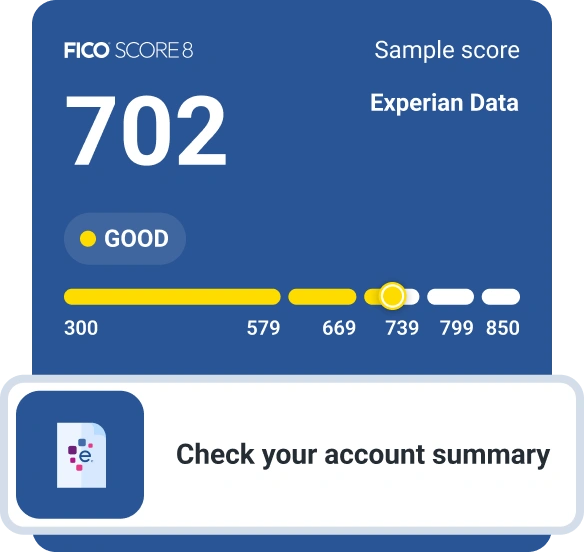
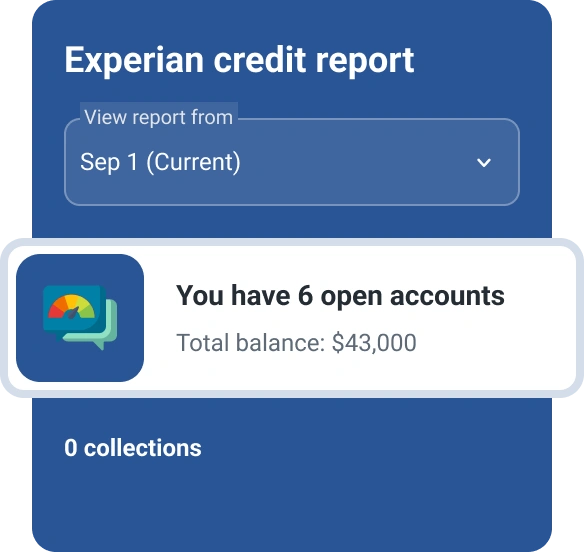
Checking your own credit won’t lower your credit scores.
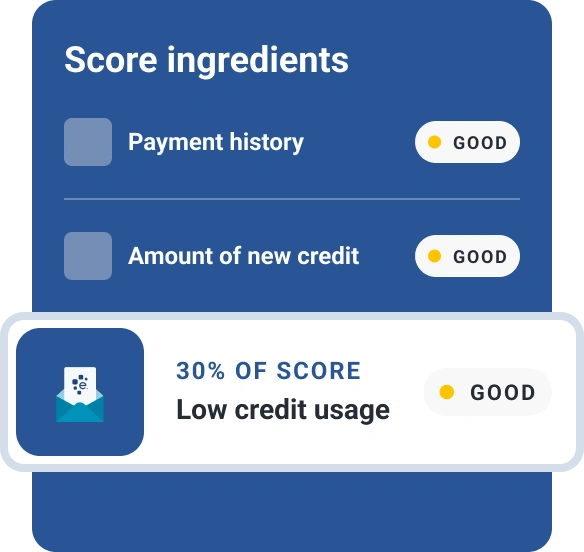
View specific factors that are affecting your score and how to improve it.
How to Improve Your Credit Score if You Have Bad Credit
Rebuilding bad credit requires avoiding further missteps while actively working to strengthen your file. Key steps include:
- Pay every bill on time going forward. Payment history is the single most important factor in your credit score, accounting for 35% of your FICO® Score and 41% of your VantageScore credit score.
- Pay down credit card balances. Keep your credit utilization below 30% of your available limit, and aim for 10% or less if possible. In general, those with higher credit scores tend to have lower credit utilization.
- Get a credit-building product. If bad credit prevents you from qualifying for a standard card or loan, secured credit cards and credit-builder loans can help you reestablish a track record of on-time payments.
- Use Experian Boost. If you have a solid history of on-time payments for rent, utilities, cellphone, insurance or streaming services, Experian Boost may deliver an immediate lift to credit scores based on your Experian data.
Frequently Asked Questions
The Bottom Line
If you have no credit or bad credit, know that it doesn't have to be permanent. No credit is the easier problem to solve, but while bad credit takes more time and patience, it can be improved. The most important step is getting started.
Check your credit report and FICO® Score for free with Experian to see exactly where you stand and what steps will make the biggest difference.
What’s on your credit report?
Stay up to date with your latest credit information—and get your FICO® Score for free.
Get your free reportNo credit card required

About the author
Ben Luthi
Ben Luthi has worked in financial planning, banking and auto finance, and writes about all aspects of money. His work has appeared in Time, Success, USA Today, Credit Karma, NerdWallet, Wirecutter and more.
Read more from Ben