
What Is a VantageScore® Credit Score?

Quick Answer
VantageScore® develops credit scoring models that companies can use to evaluate your creditworthiness. The latest score versions are VantageScore 3.0, 4.0 and 4plus. They work differently, but all range from 300 to 850 and largely depend on the information in your credit report.

VantageScore® is a company that develops consumer credit risk scores. Banks, credit unions, lenders and credit card issuers can use VantageScore's credit scores to assess how likely someone is to miss a bill payment. They might use VantageScore credit scores when sending out offers of credit, reviewing credit applications and managing their customers' accounts.
What Is VantageScore?
The three credit reporting agencies, Experian, TransUnion and Equifax, created VantageScore as an independently managed joint venture in 2006. Since then, the company has released six credit scoring models.
The most commonly used models are the VantageScore 3.0 and VantageScore 4.0 scores. In May 2024, VantageScore announced its VantageScore 4plus™ model; in April 2025, the VantageScore 5.0 model was released. All four models have a score range of 300 to 850.
When you check your credit score with a personal finance website, your credit card issuer or your bank, you may see one of your VantageScore credit scores. Here's a quick look at some of the ways the models differ.
VantageScore Versions
| VantageScore 3.0 | VantageScore 4.0 | VantageScore 4plus™ | VantageScore 5.0 | |
|---|---|---|---|---|
| Only considers data from a credit report | ||||
| Can consider additional data with your permission | ||||
| Considers trended data |
VantageScore 3.0
VantageScore 3.0 was released in 2013. It was the first tri-bureau score—meaning the same model works with a credit report from any of the three consumer credit bureaus—to use the 300 to 850 score range. It is still the version you'll often receive for free from personal finance websites and financial institutions. Unlike some other scoring models, VantageScore 3.0 doesn't consider paid collection accounts when calculating your credit score.
VantageScore 4.0
VantageScore 4.0, released in 2017, introduced trended data as a factor in calculating credit scores. While previous models only considered information from your credit report at a given time, trended data also considers changes and trends in your credit history, such as how often you've paid more than the minimum balance on your credit card (over the past 24 months in the VantageScore 4 version).
One similarity between VantageScore 3.0 and 4.0 is that both can score more people than conventional credit scoring models, according to VantageScore. VantageScore 4.0 built on the success of 3.0 to score those with thin files much more precisely.
As of July 2025, the Federal Housing Finance Agency (FHFA) approved the use of VantageScore 4.0 for mortgage loans sold to Fannie Mae and Freddie Mac. Eventually, VantageScore 4.0 will be a required score for these mortgage loans, but the timeline for implementation has yet to be determined.
Learn more: Which Credit Scores Do Mortgage Lenders Use?
VantageScore 4plus
The VantageScore 4plus™ model allows lenders to ask you to connect your bank or credit card account; it may then adjust your score based on information from your account. For example, if you are declined for a loan, the lender might give you the option to connect your bank account and use VantageScore 4plus to see if you qualify based on the new credit score.
By assessing how consumers handle their cash flow and creating predictive insights based on that information, VantageScore 4plus can provide more credit opportunities to people with limited credit history.
VantageScore 4plus adjusts your score within seconds so you can find out the results quickly. Accessing your bank account data is a one-time permission and result; using VantageScore 4plus for one credit application won't affect your VantageScore 4 score or other credit applications.
VantageScore 5.0
VantageScore 5.0 builds on previous VantageScore credit scoring models to give lenders a more detailed view of consumers' credit behavior. It analyzes both current credit behavior and trended behavior over the past 24 months to improve predictiveness, especially when scoring people who are new to credit or have a thin credit file.
VantageScore 5.0 is designed to generate more consistent credit scores across your three credit reports compared with other credit scores, and is optimized for lenders offering unsecured loans and credit cards. VantageScore 5.0 is not yet in use, but VantageScore is encouraging companies to test it, suggesting that it will allow them to offer credit to a wider range of consumers.
What Is a Good VantageScore Credit Score?
VantageScore suggests dividing its credit score range (300 to 850) into different tiers, with a score of 661 or higher considered a good score. However, lenders may have their own criteria for how they define a good credit score.
Lenders also consider other factors when evaluating your credit application, such as your income, debt-to-income ratio and history with the company. As a result, even having good credit by VantageScore's standards doesn't guarantee you'll be approved for a loan or credit card.
Lenders frequently use variations of "prime" to describe consumers' creditworthiness. But you might think of these categories as poor, fair, good and excellent credit scores.
VantageScore vs. FICO
Both VantageScore credit scores and FICO® ScoresΘ are designed to predict how likely a borrower is to become delinquent on a financial obligation. And, aside from models that can consider banking data, like the VantageScore 4plus, the credit scores are based solely on the information from one of your credit reports.
But there are similarities and differences between FICO® Scores and VantageScore credit scores.
Learn more: The Difference Between VantageScore Credit Scores and FICO® Scores
Score Range and Factors
The four most recent VantageScore credit scores range from 300 to 850. Base FICO® Scores, which are designed for use by any type of lender, also range from 300 to 850. However, FICO also creates industry-specific scoring models for auto lenders and credit card issuers; these scores range from 250 to 900.
While newer score models take information like trended data into account, the most commonly used base FICO® Score and VantageScore credit score versions broadly consider the same types of information. However, each credit scoring model may consider slightly different data points and weight information differently.
| Factor | Weight |
|---|---|
| Payment history | 35% |
| Amounts owed | 30% |
| Length of credit history | 15% |
| New credit | 10% |
| Credit mix | 10% |
| Factor | Weight |
|---|---|
| Payment history | Extremely influential |
| Total credit usage | Highly influential |
| Credit mix and experience | Highly influential |
| New accounts opened | Moderately influential |
| Balances and available credit | Less influential |
Why VantageScore Doesn't Highlight Percentage Breakdowns
As in the table above, you'll often see FICO® Score factors broken down into five factors with different percentages reflecting how important each category is to your credit score.
VantageScore sometimes creates similar charts showing different scoring factors and the percentage contribution each one has toward a credit score. However, these are a result of specific studies and can change over time and from one person to another.
These percentages are calculated based on samples of the U.S. population, but how the credit scoring models assess any one consumer is based on what's in their credit file. For example, the importance of credit utilization to a credit score can differ from one consumer to another based on the makeup of each person's credit file.
The same is true of FICO® Scores: The percentages are based on an average person and can change depending on an individual's complete credit profile. However, FICO prefers to convey the average importance of each factor in percentages, while VantageScore prefers to indicate which factors are more or less influential.
Number of Scores
VantageScore creates tri-bureau models that any of the three credit bureaus can use. In total, there are six VantageScore models: 1.0 through 4.0, 4plus and 5.0.
FICO has been developing credit scores for decades, and it creates slightly different models for each credit bureau—even if the models have the same generational name, such as FICO® Score 9 or FICO® Score 10. In total, there are over 40 versions of the FICO® Score.
Learn more: What Are the FICO® Score Versions?
Accessibility
To be eligible for a FICO® Score, you must have a credit account that's at least six months old in your credit report and show activity on a credit account within the last six months—they don't have to be the same account.
You can get a VantageScore credit score if you have a credit report with a credit account, bankruptcy filing or collection account. There's no requirement for recent account activity or for how long the credit account has appeared in your credit report.
Learn more: How Long Does It Take to Build a Good Credit Score?
Lender Use
According to FICO, 90% of top lenders use FICO® Scores. Meanwhile, VantageScore says use of its scores rose by 55% to 42 billion credit scores in 2024, according to the 2024 VantageScore Market Adoption study. In the first six months of 2025, VantageScore says online use of VantageScore mortgage scores rose 74% year over year.
Why Your VantageScore Credit Score Can Vary
Your VantageScore credit scores may vary depending on factors including which model of VantageScore credit score you check, which credit report the score analyzes and when the score was generated.
- Different score versions: There are six VantageScore credit scoring models, and you may get different versions from different credit score providers. For instance, if you get a free VantageScore 3.0 from a personal finance website and VantageScore 4.0 from your credit card issuer, the two scores could differ even if they're based on the same credit report.
- When the score was generated: Although some VantageScore credit scoring models use trending data, all are at least partly based on a snapshot of your credit profile when the credit score is created. As a result, your scores may differ at different times or if you check your scores weekly or monthly.
- Varying credit report data: All VantageScore credit scores use information in one of your credit reports, but each credit bureau's data may be slightly different. Not all financial institutions report to all three credit reporting agencies; if they do, they may report to the bureaus at different times. This can generate different scores even if the same credit scoring model analyzes your credit reports at the same time.
Learn more: Why Do I Have So Many Credit Scores?
Who Uses VantageScore Credit Scores?
Many lenders use VantageScore credit scores, and organizations can use them in different ways.
For instance, credit card issuers may use VantageScore credit scores to determine whether to approve applicants and what terms to set on new credit accounts. Many mortgage lenders have also begun using VantageScore 4.0, which will eventually be required by the FHFA.
Companies might also use a VantageScore credit score before sending firm offers of credit, when reviewing existing customers' accounts and adjusting their credit limits, or when they want to sell existing loans to investors.
Is VantageScore Accurate?
Yes, VantageScore credit scores are considered accurate. VantageScore was created by the three major consumer credit bureaus and is used by more than 3,000 lenders, including banks, credit card issuers and mortgage lenders.
How to Check Your VantageScore Credit Score
You may be able to get your free VantageScore credit score from your bank, credit union, lender, credit card issuer or loan servicer; check your account to see. Many personal finance websites also offer credit score tracking as a free benefit to members. The VantageScore website lists some of the companies that offer free VantageScore credit scores to consumers.
Tip: You can get copies of your credit reports for free on AnnualCreditReport.com. However, the reports don't include a credit score.
How to Improve Your VantageScore Credit Score
VantageScore credit scores differ from FICO® Scores and may consider slightly different information depending on the credit scoring model. However, since all credit scores are designed to do the same thing—predict risk—the same actions could help increase both your VantageScore credit scores and FICO® Scores. Here are steps you can take to help improve your credit:
- Pay bills on time. Missing a debt payment by 30 days or more could damage your credit. If you have any past-due payments, bring them current as quickly as you can to avoid further harm.
- Keep your credit card balances low. Your credit card balance relative to your credit limit—your credit utilization rate—has a major impact on your credit scores. A lower utilization rate is best.
- Keep old credit cards open. Even if you don't plan to use them, keeping credit cards open increases your available credit, which can help you maintain a low credit utilization rate. Unless an old credit card tempts you to overspend or it has an annual fee you can't afford, it's best to keep the account open.
- Avoid applying for new credit too often. Applying for and opening new credit accounts can hurt your credit. Try to avoid unnecessary credit applications, and space out the applications, if possible, to limit their impact.
- Maintain a mix of credit types. Having both revolving and installment credit accounts creates a diverse credit mix, which can help increase your scores. Although you shouldn't apply for an account without reason, opening a fee-free account, such as a lending circle loan or credit card with no annual fee, can help build your credit.
- Avoid taking on excessive debt. The more debt you have, the harder it can be to stay current with your payments. Only apply for credit if you can comfortably afford the new payment on top of your other financial obligations.
Tip: Adding payments to your credit reports could improve your credit scores without opening new accounts. For example, Experian Boost®ø is a free feature that adds eligible rent, utility, cellphone, insurance and streaming service payments to your Experian credit report. Timely payments could improve VantageScore 3.0 and VantageScore 4.0 scores and certain FICO® Scores.
Instantly raise your credit scoresø
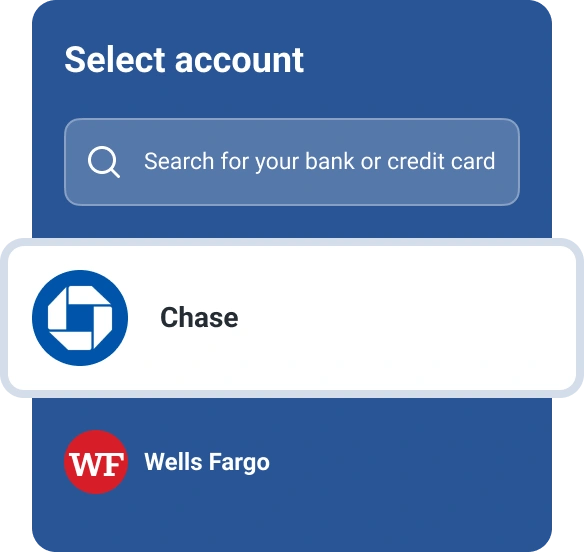
Add any bank accounts you use to pay your bills. Your information remains private.
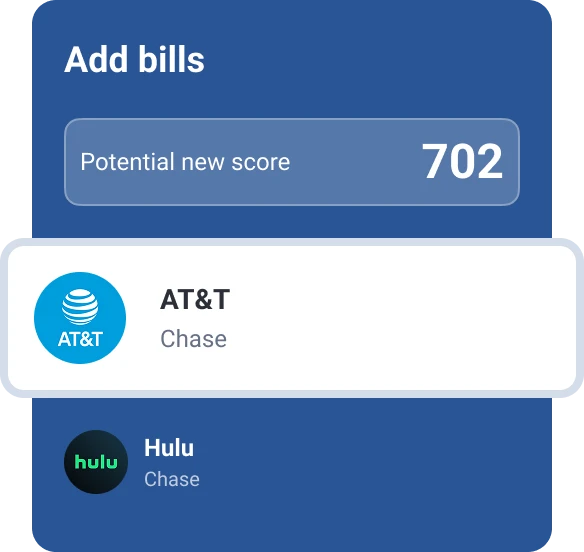
We’ll detect bills with on-time payments, and you can add them to your Experian credit file.
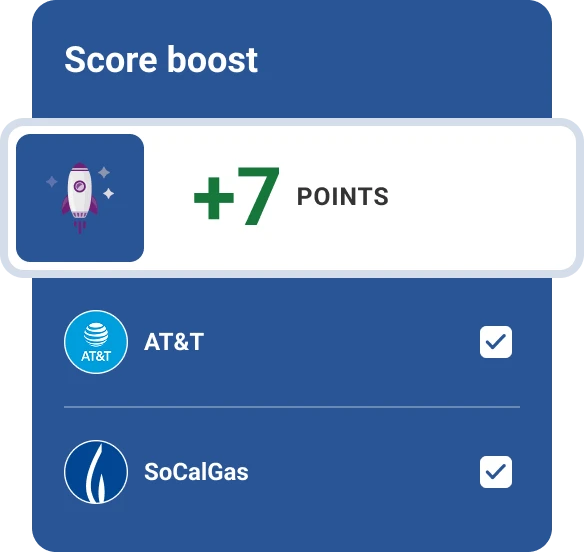
You’ll find out right away if your credit scores increased and by how many points.
Keep an Eye on Your Credit
Since your credit reports are the foundation for all your credit scores, it's important to monitor them for changes and accuracy. One easy way to keep tabs on your credit is Experian's free credit monitoring service. You'll get access to your Experian credit report, be able to track your FICO® Score and get real-time alerts of important changes to your credit report that could signal fraud.
Instantly raise your FICO® Score for free
Use Experian Boost® to get credit for the bills you already pay like utilities, mobile phone, video streaming services and now rent.
No credit card required

About the author

Louis DeNicola
Louis DeNicola is freelance personal finance and credit writer who works with Fortune 500 financial services firms, FinTech startups, and non-profits to teach people about money and credit. His clients include BlueVine, Discover, LendingTree, Money Management International, U.S News and Wirecutter.
Read more from Louis